
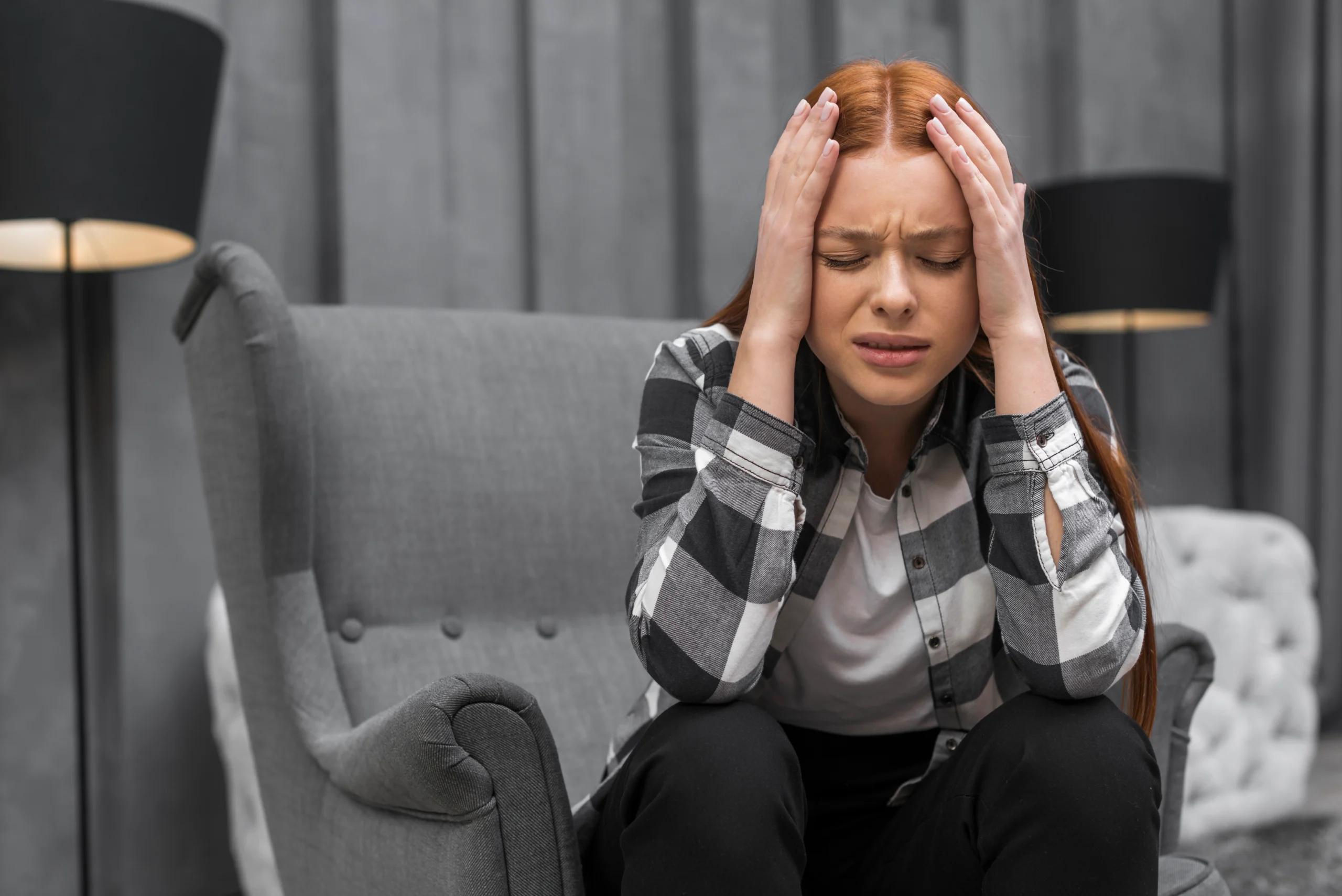
The most prevalent mental disorder in the world is anxiety and the world health organization estimates that 301 million individuals are affected by this disorder. But regardless of its commonness it is well misconceived. The manifestations of anxiety are brushed off by many individuals to be stress, weakness, or just worrying too much and putting off seeking help until months or even years later. Early identification of anxiety, learning all the symptoms of anxiety, and being aware of effective methods of coping with anxiety can have a great impact on the quality of life.
What Is Anxiety?
Anxiety is a natural response of the body to a perceived menace or uncertainty. In low dosages, it is adaptive-it increases concentration before a presentation or gives the desire to act when it is time to meet a deadline. The issue arises when the anxiety reaction turns chronic, imbalanced with regard to genuine threats, or starts disrupting the normal functioning.
Anxiety disorders are various disorders such as Generalized Anxiety Disorder (GAD), Social Anxiety Disorder, Panic Disorder, Specific Phobias and Separation Anxiety. These are different, yet they all have the common element of too much, too hard to manage fear or worry.
Typical Symptoms of Anxiety
The most important step towards seeking the right help is to be aware of the symptoms of anxiety. The state of anxiety in different individuals is not the same yet some patterns can be observed.
Cognitive and Emotional Signs.
The most well-known symptoms are psychological in nature, which are constant worrying, obsessive thoughts, feeling of doom, and lack of concentration. Anximetrics tends to catastrophize and envision the worst case scenarios and cannot shift their thought process even when they realize that they are being irrational.
Another sign of anxiety with regards to emotion that is commonly ignored is irritability. Even the smallest frustrations can be overwhelming when the nervous system is constantly on fire. Another symptom is difficulty falling asleep because of racing thoughts, and disturbed sleep also exacerbates the symptoms of anxiety even more – a vicious cycle.
Behavioral Signs
The main behavioral symptom of anxiety is avoidance. Individuals can avoid social, specific locations or activities that cause anxiousness. Although avoidance will have a short-term alleviating effect, it increases anxiety in the long-term as the brain will not learn that the dreaded scenario can be handled.
Anxiety disorders also seem to be common behavior manifestations that include procrastination based on the fear of failure, excessive reassurance-seeking, and decision-making problems.
Physical Symptoms of Anxiety.
And what most individuals are oblivious to is that anxiety is not just a mental experience but a physical one as well. Physical symptoms of anxiety are related to fight-or-flight reaction of the body, a complex of physiological processes provoked by an adrenaline hormone.
Fast heartbeat (palpitations) the heart works harder to supply more blood to the muscles.
Chest tightness or pressure – can be confused with heart issues.
Shortness of breath – breath becomes rapid and shallow.
Muscle tension and headaches – constantly tight muscles, especially in neck and shoulders.
Intestinal problems – nausea, stomach cramping, diarrhea or IBS-like symptoms.
Sweat and shaking- the body is ready to work.
Lightheadedness or dizziness- usually as a result of hyperventilation.
Fatigue – long-term worry is tiring both mentally and physically.
These are actual physical symptoms of anxiety and not imaginary. The brain-body relationship is thoroughly documented and anxiety may cause symptoms that truly seem like they are physically sick. That is why, a lot of individuals visit several doctors until they are diagnosed with anxiety.
Symptoms of an Anxiety Attack.
Panic attack (also known as anxiety attack) is an abrupt attack of overwhelming fear, which reaches its peak in a few minutes. Anxiety attack symptoms are usually dramatic and scaring – most individuals think that they are experiencing a heart attack or death.
Among the symptoms of an anxiety attack are the sudden and overwhelming fear or terror, rapid heart beat, chest pains, shortness of breath, dizziness, numbness or tingling in hands or face, feeling a lack of reality or detachment (depersonalization), and feeling a strong desire to get out of the situation.
Panic attacks can last 5-20 minutes. Although they make them feel unsafe, they are not physically unsafe. But they are very upsetting and frequently result in avoidance of situations where attacks have taken place – a trend which can severely limit life.
Serious Symptoms of Anxiety to Keep an eye on.
All anxiety should be attended to but serious symptoms of anxiety indicate that professional help is required. These are panic attacks which happen again and again without notice, anxiety so severe that it doesn’t allow a person to leave home, thoughts of self-harm or that life is not worth living, alcohol or other substances to cope with anxiety and physical symptoms (chest pain, difficulty breathing) that never go away.
Stressful symptoms of anxiety that are not treated may only get worse as time goes and result in depression, substance abuse, and a considerable disruption in relationships and work. Professional help at the very beginning is a significant way to enhance results.
Effective ways to handle Anxiety.
Cognitive Behavior Therapy (CBT)
CBT is the standard of treatment of anxiety disorders, which has arisen over decades of research. It is based on the principle of assisting individuals to detect distorted thinking patterns and substituting them with more balanced ones. A significant improvement occurs in 12 to 20 sessions for many people. CBT skills are learned skills which are useful even after therapy.
Mindfulness and Meditation
Mindfulness-based practices educate individuals on how to notice anxious thoughts without getting carried away by them. Mindfulness is now available in apps such as Headspace and Calm, and studies indicate that regular practice leads to a decrease in the symptoms of anxiety. Already 10 minutes of mindfulness meditation per day have observable effects in 8 weeks.
Controlled Breathing Techniques
When anxiety triggers the fight or flight response, consciously slow breathing leads to the activation of the parasympathetic nervous system – the rest and digest part. The 4-7-8 (inhale 4 counts, hold 7 counts, exhale 8 counts) and box breathing (inhale 4 counts, hold 4 counts, exhale 4 counts, hold 4 counts) techniques are evidence-based techniques to reduce acute anxiety quickly.
Regular Exercise
One of the best natural remedies of anxiety is exercise. Exercising aerobically decreases stress hormones, releases endorphins and enhances sleep which are all direct antidotes to anxiety. A single 30-minute moderate exercise three to five times per week leads to a considerable reduction of anxiety in clinical studies.
Limit Caffeine and Alcohol
Caffeine activates the same kind of stress reaction that anxiety causes, and in many cases, it exacerbates the symptoms, especially in individuals who tend to have panic attacks. Alcohol alleviates sleep but it disturbs sleep architecture and exacerbates the next day anxiety. Both of them can be reduced or eliminated, which can lead to significant changes.
Medication and Professional Help.
Professional treatment, therapy, medication or a combination is usually required and effective in the case of moderate to severe anxiety. The first-line drugs are the SSRIs (selective serotonin reuptake inhibitors) such as sertraline and escitalopram. Buspirone and SNRIs are not left behind either. Prescription of benzodiazepines can be on a short-term basis to relieve acutely but with dependency potential.
Conclusion
Anxiety is not a personality defect, a weakness, or something to go it alone. The symptoms of the feeling of anxiety are actual, the physical symptoms are real, and there is effective assistance. Be it gentle worry or extreme anxiety symptoms, knowing what you are going through is the starting point of change. Make the first move – it could be talking with someone you can confide in, attempting a breathing technique or making an appointment with a mental health specialist. Anxiety is something that can be managed with the appropriate support and plans and life returns to normal.
