
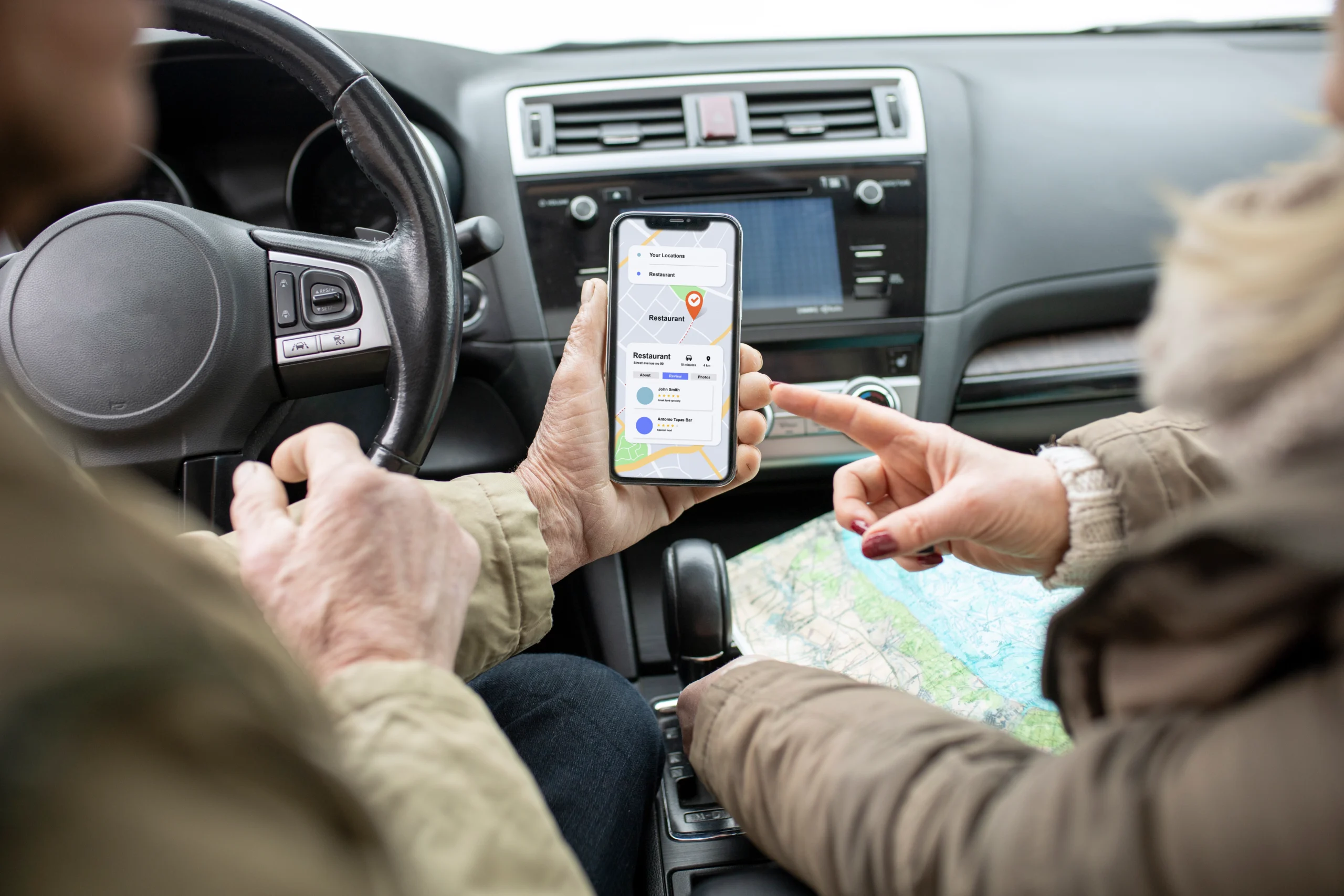
Every time you tap “get directions” on your phone or check the location of your pet using a Tractive GPS tracker, you are tapping into one of humanity’s most impressive technological achievements. The technology that powers navigation, logistics, and real-time tracking is a marvel of physics, engineering, and international cooperation. But how does it actually work? This guide explains the GPS system from satellites to your screen and explores the many ways these devices have become indispensable in daily life.
What Is GPS and Who Created It?
GPS stands for Global Positioning System. It is a satellite-based navigation system owned and operated by the United States government through the Department of Defense. Originally developed for military use in the 1970s, GPS was made available for civilian use in the 1980s, and since then it has become the backbone of modern navigation, logistics, and location-based services.
Today, GPS is just one of several Global Navigation Satellite Systems (GNSS). Russia operates GLONASS, the European Union operates Galileo, and China runs BeiDou. Most modern tracking devices and smartphones can access multiple satellite systems simultaneously to improve accuracy.
How Does a GPS Tracker Work? The Core Principle
GPS technology works through a process called trilateration. Here is how it breaks down:
Step 1: The Satellite Network
The GPS constellation consists of at least 24 operational satellites orbiting Earth at an altitude of approximately 20,200 kilometers. These satellites are arranged so that at any point on Earth, a GPS receiver has a line of sight to at least four satellites simultaneously.
Each satellite continuously broadcasts two pieces of information: its exact position in space and the precise time of transmission (using atomic clocks accurate to billionths of a second).
Step 2: Signal Reception
Your device or smartphone receives signals from multiple satellites. Because the speed of light is constant, the receiver can calculate how far away each satellite is by measuring how long the signal took to arrive. This distance is called a pseudorange.
Step 3: Trilateration
With distance measurements from at least four satellites, the GPS tracker can calculate your precise position in three dimensions: latitude, longitude, and altitude. Four satellites are needed (rather than three) to also solve for the receiver’s own clock error, which would otherwise distort the position calculation.
The entire process happens in real time, millions of times per second across billions of devices simultaneously without the satellites knowing who or what is receiving their signals.
GPS Tracker for Car: Real-World Applications
One of the most commercially popular uses of this technology is vehicle tracking. It has transformed fleet management, personal security, and automotive insurance.
A vehicle tracking device typically plugs into the vehicle’s OBD-II diagnostic port or is hardwired into the electrical system. It continuously logs the vehicle’s location, speed, and movement history. Families use them to monitor new drivers, businesses use them to manage delivery fleets, and insurance companies offer discounted premiums for vehicles equipped with tracking devices.
Popular GPS tracker for car products in 2026 include the Optimus 2.0, LandAirSea 54, and Bounce Tracker all offering real-time location updates through companion smartphone apps.
Tractive GPS Tracker: Location Technology for Pets
The Tractive GPS tracker is one of the most widely used pet tracking devices globally. Attached to a pet’s collar, it uses GPS technology combined with cellular networks to provide real-time location data accessible through a smartphone app.
It works even when your pet ventures far from home unlike Bluetooth-based trackers that only work within a short range. It can set virtual geofences that trigger alerts when a pet leaves a designated safe zone. For dog and cat owners, this kind of device provides invaluable peace of mind.
How Accurate Is GPS Technology?
Modern civilian GPS receivers achieve horizontal accuracy of approximately 3–5 meters under open sky conditions. GPS technology has improved significantly through several enhancements:
• WAAS (Wide Area Augmentation System): A network of ground stations that broadcasts correction signals, improving accuracy to under 3 meters across North America.
• Assisted GPS (A-GPS): Used by smartphones; combines GPS satellite data with information from nearby cell towers and Wi-Fi networks to lock position faster and more accurately in urban environments.
• Differential GPS (DGPS): Used in precision applications like surveying and aviation; achieves sub-centimeter accuracy.
Limitations of GPS Technology
Despite its power, GPS technology has meaningful limitations worth understanding:
• Indoor performance: GPS signals struggle to penetrate buildings. Indoor positioning requires supplementary technologies like Wi-Fi triangulation or Bluetooth beacons.
• Urban canyons: Tall buildings in dense city environments can reflect satellite signals, causing multipath errors that reduce accuracy.
• Signal jamming: Military and criminal actors can deliberately disrupt GPS signals in localized areas.
• Battery dependency: Mobile tracking devices particularly pet and personal trackers require regular charging.
The Future of GPS Technology
GPS technology continues to evolve. The modernized GPS III satellite series offers improved accuracy, stronger signals, and better resistance to jamming. Integration with AI and machine learning is enhancing location prediction useful for navigation apps that anticipate your route before you even start moving.
The intersection of GPS with augmented reality (AR), autonomous vehicles, and drone delivery systems will make this technology even more central to everyday life in the coming decade.
Conclusion
A GPS tracker is one of the invisible pillars of modern life. From the vehicle tracker that monitors your delivery fleet to the Tractive device keeping tabs on your pet, the underlying system of satellites, signals, and trilateration works silently and accurately around the clock. Understanding how GPS technology works helps you appreciate both its remarkable precision and its practical limitations and use it more effectively in your daily life.
