
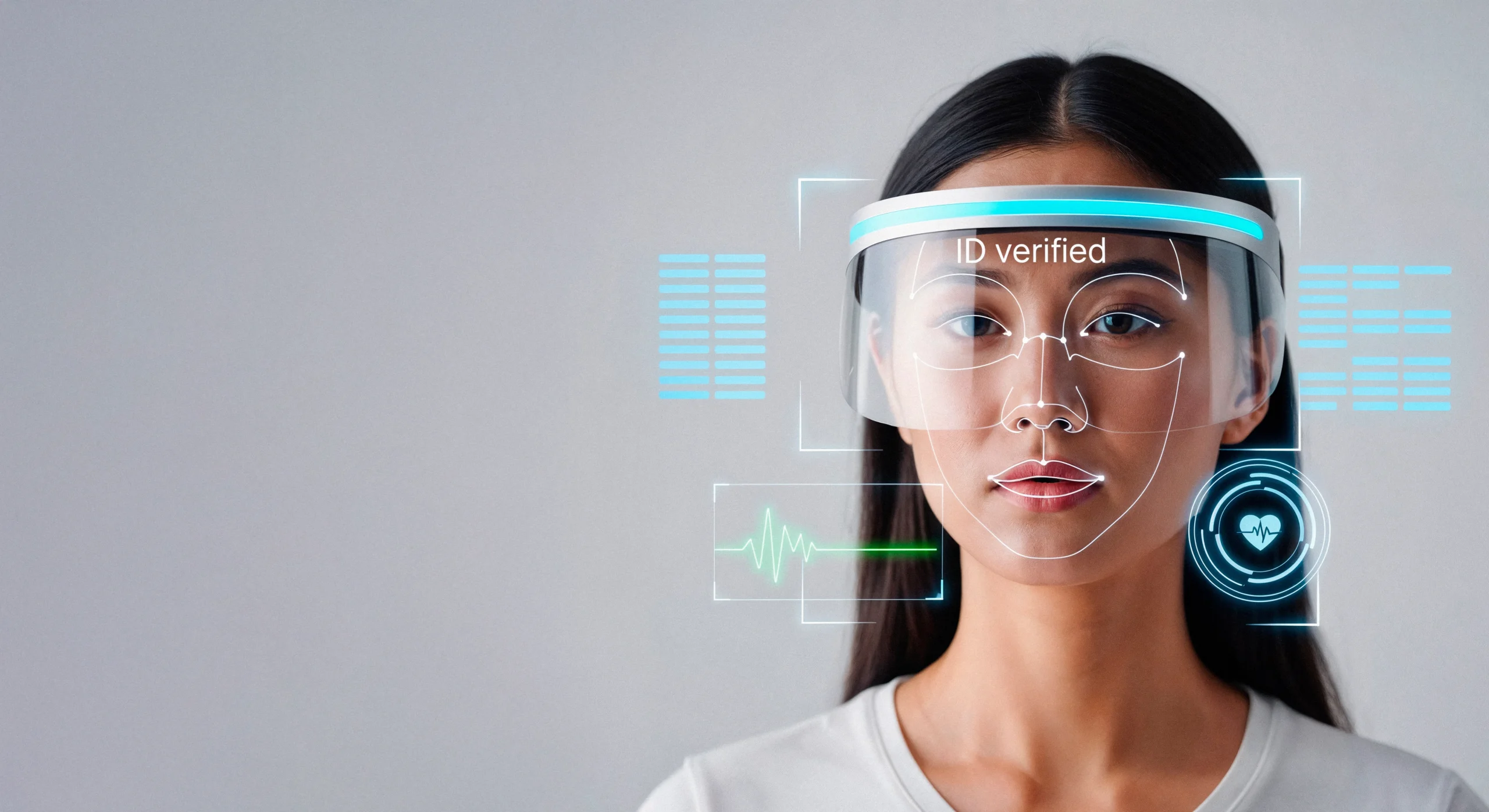
Facial recognition technology is no longer science fiction. It unlocks your smartphone, tags photos on social media, identifies suspects in criminal investigations, and powers attendance systems in schools and offices. Few technologies have integrated so quickly into so many aspects of life and few have sparked as much debate. Understanding how this system actually works is the first step toward forming an informed opinion about its use and implications.
What Is Facial Recognition Technology?
Facial recognition technology is a biometric software-based system that identifies or verifies a person’s identity by analyzing patterns in their facial features. Unlike passwords or physical ID cards, your face is a unique biological identifier that can be captured passively from a distance without your knowledge or consent.
It works through computer vision and machine learning algorithms trained on large datasets of human faces. Modern systems can identify individuals with remarkable accuracy across different lighting conditions, angles, ages, and even partial occlusions like face masks.
How Does Facial Recognition Technology Work?
Step 1: Face Detection
The first step is detecting that a face exists in an image or video frame. Biometric software uses convolutional neural networks (CNNs) to identify regions of an image that contain human faces, separating them from backgrounds and other objects.
Step 2: Feature Extraction and Mapping
Once a face is detected, the system analyzes its geometry. This involves identifying and measuring key landmarks known as nodal points including the distance between eyes, the width of the nose, the depth of eye sockets, the shape of the jawline, and the distance from forehead to chin.
Advanced technology converts these measurements into a mathematical representation called a faceprint or face embedding essentially a compact numerical code that uniquely represents your face.
Step 3: Matching and Identification
The generated faceprint is compared against a database of stored faceprints. The software calculates a similarity score between the captured face and stored records. If the score exceeds a defined threshold, a match is declared.
This process can operate in two modes: verification (one-to-one: “Is this the specific person they claim to be?”) and identification (one-to-many: “Who is this person from a database of millions?”). Law enforcement biometric search tools primarily operate in the identification mode.
Where Is Facial Recognition Technology Used Today?
This biometric tool is deployed across a surprising range of sectors:
• Consumer electronics: Smartphone unlock features (Apple Face ID, Android face unlock) use on-device biometric software for secure, convenient access.
• Airport security: Many international airports use this system at boarding gates, eliminating the need for boarding pass scans and significantly speeding up the process.
• Law enforcement: Police agencies use facial recognition search tools to match surveillance footage against criminal databases. The FBI’s Next Generation Identification system and Clearview AI are prominent examples.
• Retail: Some stores deploy biometric systems to identify known shoplifters or detect suspicious behavior patterns.
• Banking and finance: Financial institutions increasingly use biometric software as part of identity verification for account opening and secure authentication.
• Healthcare: Hospitals use this technology to verify patient identity and prevent medical identity theft.
How Accurate Is Facial Recognition Software?
Modern biometric software has achieved remarkable accuracy under controlled conditions. Algorithms tested by the National Institute of Standards and Technology (NIST) have demonstrated error rates below 0.5% for high-quality frontal images under consistent lighting.
However, accuracy varies significantly across demographics. Multiple studies including research from MIT Media Lab have found that these systems perform less accurately on darker-skinned individuals and women compared to lighter-skinned men. These disparities stem from imbalanced training datasets and remain a serious concern in systems used for consequential decisions like law enforcement.
The Privacy and Ethical Concerns
This technology raises profound questions about privacy, consent, and civil liberties. Key concerns include:
Mass Surveillance
Unlike fingerprints or DNA which require physical contact and a deliberate collection process, this biometric tool can be applied to existing CCTV networks and public cameras at scale. A government or corporation with sufficient camera infrastructure could theoretically track any individual’s movements across a city in real time.
Misidentification and False Arrests
Several documented cases exist of individuals particularly Black men being wrongfully arrested based on erroneous biometric matches. In the United States, Robert Williams and Michael Oliver are among those who were falsely detained due to incorrect biometric identification.
Data Security
This software requires storage of biometric data faceprints which, unlike passwords, cannot be changed if compromised. A data breach exposing a database of faceprints creates a permanent biometric identity theft risk.
Regulation of Facial Recognition Technology
Governments and institutions are grappling with how to regulate facial recognition technology. The European Union’s AI Act places it in the high-risk AI category and imposes strict requirements for its use. Several U.S. cities including San Francisco, Boston, and Portland have banned government use of these systems.
Industry self-regulation has also emerged. Microsoft, IBM, and Amazon have all paused or restricted sales of their biometric software to law enforcement pending clearer legal frameworks.
Should You Be Worried?
The honest answer is: it depends on context. Facial recognition technology used to unlock your phone is a privacy-enhancing convenience: your data stays on your device and serves your interests. When deployed by governments or corporations on public infrastructure without consent, it is a different matter entirely.
Being informed about how this technology works and where it is deployed is the most important step any individual can take. Advocacy for clear legal frameworks, demographic fairness testing, and transparency in deployment will determine whether this powerful tool becomes a broadly beneficial technology or an instrument of overreach.
Conclusion
Facial recognition technology is among the most powerful and controversial tools developed in the age of artificial intelligence. Its ability to identify individuals from video footage in seconds has real benefits and real risks. Understanding how these systems work, where this software is deployed, and what safeguards exist helps you engage meaningfully with the policy debates that will define how this technology shapes society. The question is not whether to worry, it is how to ensure this technology is used responsibly.
