
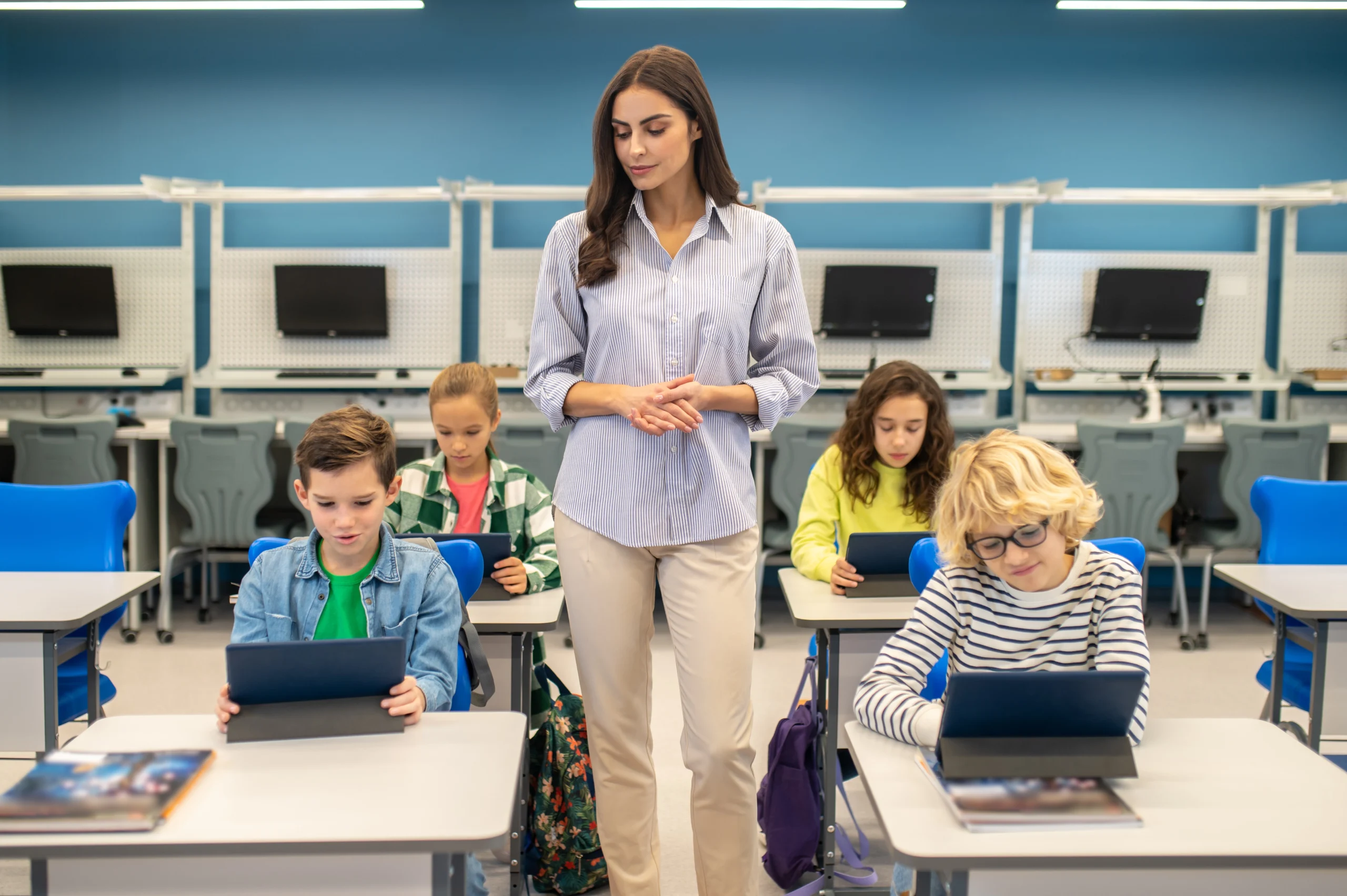
Classroom management has been one of the most critical elements of student achievement, teacher practices, and general learning outcomes. Studies have always revealed that well-managed classrooms have the potential of boosting academic performance by as much as 20 percent and disruptive behavior is also greatly reduced. In the current fast changing environment of education, it is no longer necessary to talk of classroom management that solely involves rules and discipline. It has now incorporated design, involvement of students and use of technology in a responsible manner. When teachers are informed about how to balance in the use of structure and the use of flexibility, it is more likely to have a safe, inclusive, and productive learning process that is able to help students to flourish.
Learning the Foundations of Classroom Management
In its simplest definition, classroom management can be described as the strategies that teachers apply in order to ensure that the learning environment is well-organized, respectful, and focused. The practices assist in reducing distractions and maximizing the instructional time. The research reveals that educators utilize close to 30 percent of classroom time to combat behavioral problems in cases where management systems are ambiguous thus the need to plan purposefully.
The Expectations and Consistency Role
The effective classroom management strategies are on clear expectations. As they learn behavioral standards at an early stage, the students tend to adhere to them. Regularity in implementing rules also instills trust and equity, which affect student engagement and drive directly.
Learning Can Be Fostered in Classrooms by Adopting Classroom Management Strategies
The contemporary classroom management techniques focus on prevention and not reaction. Teachers are becoming more concentrated on positive reinforcement, social emotional learning, and student responsibility. It is indicated in the recent reports on the education trends that schools that have proactive behavior frameworks record low rates of suspensions and better attendance.
Incorporation of routines that facilitate learning flow is one way. This involves systematic changeover, consistent schedules and participative instructions. There are also new dimensions brought about by technology, including classroom management unblocked systems where the educators can lead the way to enable students to use their devices in the classroom without interfering with the lessons.
- Create routines in the classroom.
- Apply positive reinforcement in a regular manner.
- Promote student agency and student voice.
- Introduce technology within a set of limits.
Through these strategies, there is a chance of establishing the condition where the student is encouraged and yet held responsible, which strengthens the management of classroom without necessarily the use of punitive actions.
How to Set Up a Classroom Management Plan That Works
A classroom management plan is like a road map on how to deal with behavior, engagement, and instruction. It agrees on expectations, consequences, and rewards in a straightforward and understandable way. Teacher survey data indicate that teachers who have written plans have less stress and better classroom management.
Integrating Plans and Student Requirements
The process of classroom management plan must be based on the developmental and cultural requirements of learners. It must be flexible since there is no classroom that is similar. Educators that frequently revise and realign their plans are likely to experience increased cooperation among students and academic concentration.
Technologies and Supervision of Classrooms
Digital learning has changed the classroom management in a dramatic manner. As the number of students who use devices to learn increases, teachers have to manage the access and control. Examples of tools that have become the subject of educational research include Lightspeed classroom management, which is discussed as an example of how schools can be able to monitor digital activity and still ensure that the flow of instruction can continue.
Notably, unblocked methods in classroom management are based on responsible access and not restriction. This enables students to engage in digital resources without facing risks but in a manner that they remain on track with the objectives of learning. The latest technology education reports indicate that classrooms with instilled digital supervision have less off-task behaviors and greater engagement.
Assessing the Effect of Classroom Management
Classroom management is directly related to academic performance and the well-being of students. The research on large scale of students, those in well managed classrooms, has yielded that these students show greater self regulation and better test scores in the long run. The teachers also claim an enhanced job satisfaction when the classroom systems are running smoothly.
On-Going Improvement by Reflection
Reflection is important in polishing the classroom management strategies. Teachers that understand what is effective and what is not effective can vary their methods with the evolving classroom dynamics. This reflection practice makes the management of the classroom responsive and student centered.
Future of Classroom Management
With education still changing, classroom management will be a dynamic and a vital skill in the classroom. The tendencies are toward more connectivity of social-emotional learning, data-informed decision-making, and considerate application of technology. An excellent classroom management plan coupled with an able and flexible approach equips teachers to handle such changes in a confident manner.
Eventually, classroom management is concerned with the ability to make the classroom environment structured and interesting to learn in. Through setting expectations, creating successful classroom management plans, being responsible in digital supervision, and continuous reflection, teachers can work to create classrooms that can help students grow academically and personally. It is not just that good classroom management is beneficial to students in the present day but also development of life skills extending well beyond the classroom.
