
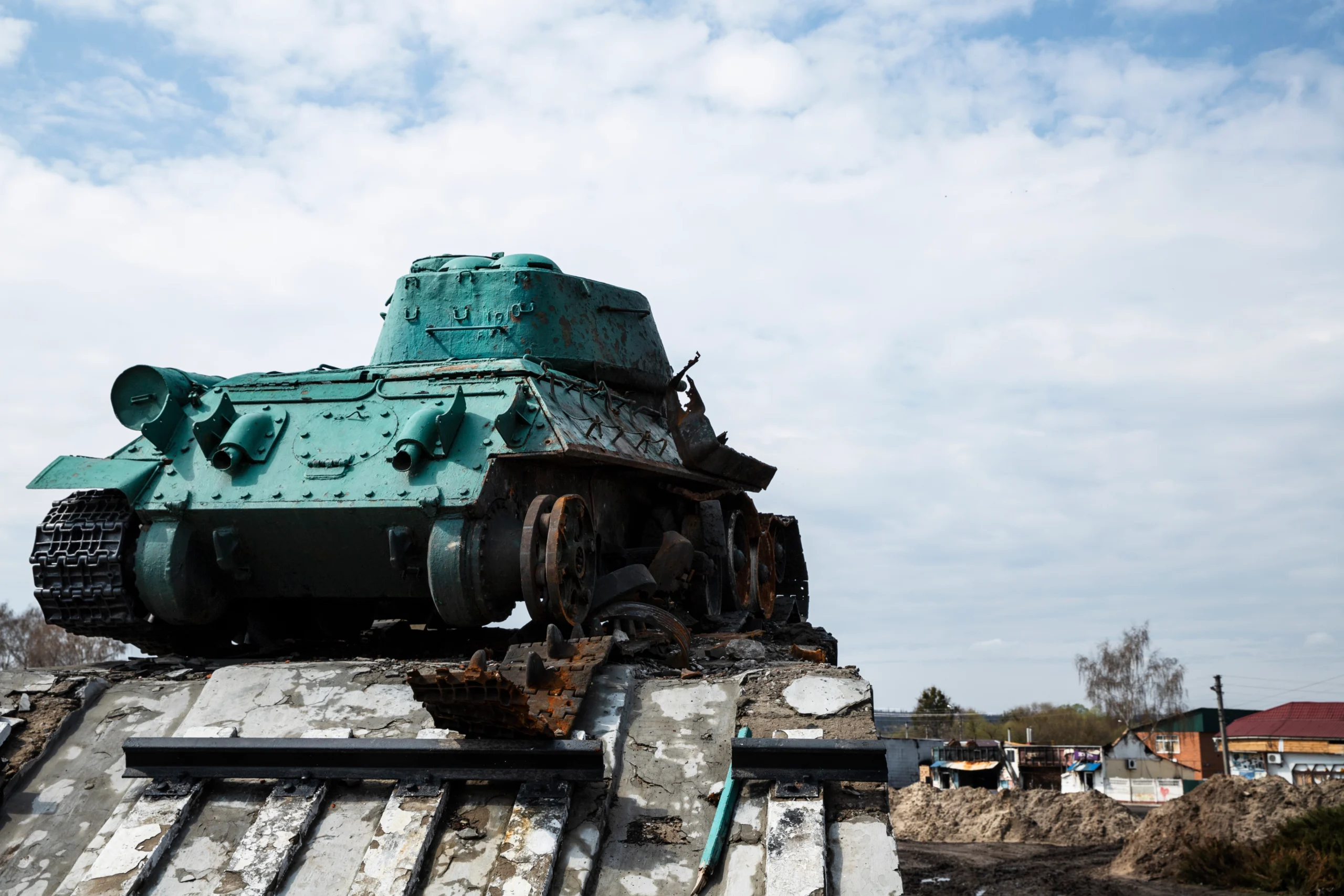
The world is still witnessing the war in Ukraine enter a new phase of sophistication and grueling levels. What used to be a low-profile territorial conflict several years ago has evolved to be a high-tech war of attrition that is pushing the boundaries of modern warfare doctrine and international relations. To scale the depth of the issue of why this struggle is still on, it is necessary to scale down to the changing strategies on the ground and the inexorable survival of the participants. By February 2026, geopolitical reality will still be tied to the results of these daily confrontations, and each update will be of utmost importance to global stability.
The Development of the Frontline
The present situation of the war in Ukraine today is incredibly different from the initial days of manoeuvre warfare. Analysts now refer to the state of affairs as a high-tech stalemate. Although satellite photography depicts huge fortifications all over the Donbas, the real advancement of the line of control is in meters instead of miles. Such stagnation is not caused by the absence of aggressiveness but is explained by the perfect visibility of the battlefield. The surprise factor is basically eliminated with thousands of reconnaissance drones flying every minute, and the ability to break through armors in large masses is almost impossible at the cost of devastating losses.
Tactical changes are the order of the day in the northern areas around Kharkiv. They both have spent a lot of money on underground logistical systems to circumvent the overhead loitering munitions that are constantly monitored. This underground war is a testimony to the adaptive capability of the modern combatants who have to grapple with an environment in which any object that moves over an air is also targeted in a matter of minutes.
The Reason Why Drone Technology Altered the Battlefield
Assuming that 2024 was the year of the FPV drone, 2026 will be the year of fully autonomous swarms. War in Ukraine update reports this quarter have pointed out that there has been a huge jump in the integration of artificial intelligence. There is no longer a need to have a single drone with a single pilot in a unit, but rather, integrated AI mothships use dozens of sub-units, which are capable of navigating electronic warfare jamming without human control. This has made the conventional signal-jamming devices less efficient and the mobile air defense systems had to be redesigned at a high rate.
The level of strategic depth of the conflict has widened as well. Strikes over a long distance are not a rare phenomenon anymore but a way of life. Long-range drones by sea and by air have become a common target of the industrial centres located deep in the inland heart of the area, to effectively disable the economic powerhouse that drives the front lines. Such an increase in the battle area ensures that even the inhabitants hundreds of miles away on the other side of the trenches are in a continuous state of alert.
The Human and Economic Toll
The continuation of the war in Ukraine news has led to a humanitarian crisis of never before dimensions in the modern age. According to the statistics of the beginning of 2026, it is estimated that more than 10 million individuals will remain displaced, and a substantial amount of the younger generation will be living in a foreign state. The internal economy has been turned upside down to a war footing where close to half of the national budget is focused on defence and social services of the veterans.
- Artillery expenditure made on an average day has stabilized at 10,000 rounds.
- The reliability of power grids has declined to 60 percent owing to constant long-range strikes.
- More than 30 percent of the former agricultural lands are still polluted by the unexploded ammunition.
- The number of international financial aid is now about 40 percent of the yearly GDP.
- More than 200,000 experts work in the domestic sphere of the drone production industry.
These characters depict a society which has been compelled to make the abnormal normal. The psychological effect a generation of children raised in bomb shelters will have is a secondary crisis, which according to experts will require decades to resolve, far after the rebuilding process starts.
International Logistics and Strains in Resources
Ammunition shortages, and bottlenecks in supply chains have been the primary news cycle topics in the war in Ukraine. By 2026, a worldwide scramble of shells has made the traditional manufacturing resurgent albeit on a vast scale. Countries which had greatly shut down their heavy industry are now in a frenzy to re-open their factories to take the order of 155mm shells and solid-rocket motors. This change has unintentionally caused a commodity spike in the world market with the prices of special steel and high-grade explosives on record highs.
Moreover, the war has brought a complete reconsideration of energy security. The shift to liquified natural gas and renewable grids, replacing traditional pipelines, has increased in speed, shifting the wealth distribution of nations engaging in energy export. The strategic significance of the Black Sea as a grain passage is a topic of interest because the food prices in the world depend on whether the shipping lines are safe or not.
Why Diplomacy Grows Stagnant
Many are left wondering how it can always be elusive after years of fighting to have a ceasefire. The key challenge is the initial conflict concerning the sovereign territory and security provision. In the conflict in Ukraine, both sides of the war address it in an existential way. On the one hand, it is a fight for the right to live as an independent state and on the other hand it is treated as the necessary barrier to external intrusion as it is perceived. This diametric opposition renders traditional solutions of the middle ground blatantly hard to negotiate.
The international mediators have already suggested different models of a frozen conflict that can be based on the example of the Korean Peninsula; however, they have not found much support on the ground. The feeling that is dominant within the leadership is that any working hiatus without a concrete security structure will only encourage the enemy to be back to the drawing board to re-equip themselves to launch an attack at a later date.
Conclusions on the Current Course
When we consider the war in Ukraine now, we will realize that it has become the trigger to a new era of global competition. The experience gained in the battlefields of the East is already becoming a part of the defensive policies of the countries all over the world. The implications of this war on the region spread much further than just the territories of the region, as shown by the significance of decentralized command and the need to manufacture on the domestic level.Conclusively, the war in Ukraine will end probably not as a result of military strength but economic sustainability and technological advancement. As the world advances further into 2026, the agenda is to take care of the civilian population and find a way to a sustainable peace that should be in line with international law and the right to self-determination.
